
The plan keeps changing
How often do you start the day’s production with a plan, only to find that by midday, it has already changed?
Urgent orders arrive, priorities are shuffled and teams switch tasks. Supervisors end up spending most of their time managing production problems and instead of helping the team follow the plan they started just a few hours earlier.
But this is rarely just a planning issue.
This is an instability in the system or process. It’s often caused by unreliable equipment, varying process times, lack of priorities and no visibility of real capacity. When the system is unstable, the plan will rarely hold. This leads to a loss of productivity and increased pressure across the whole team.
Stability must come first. That means reducing breakdowns and variability, improving synchronisation between teams, understanding real capacity, setting clear priorities and creating daily control so that problems are not discovered too late.
The outcome of a more stable system is that plans are followed better, priorities are clearer and teams can execute everything more effectively instead of constant firefighting.
Primus Passus Consulting can help you understand the cause of instability and where to start.

The day becomes constant firefighting
It is not unusual for production teams to be constantly firefighting, but it does not have to become the norm.
It is because unexpected problems occur throughout the day, priorities change, tasks switch and managers start ‘chasing’ instead of ‘leading’. By the end of the day, there are production delays and everyone feels overloaded while objectives have maybe not been achieved.
But this is not a lack of discipline or effort or even an organisation problem. It is often a problem with the system. Instability and a lack of control invariably create a lack of flow. It is not enough to push teams harder, react faster or ask for more effort. Stability needs to be obtained, control secured and flow needs to be restored.
The goal is not to do more or faster but to remove the cause of overload.
When visual management improves, days become more predictable. Fewer issues need escalation. People spend less time reacting. Managers can focus on improving operations.
That starts by making the work visible, clarifying priorities, reducing interruptions and creating a structured problem-solving routine.
Primus Passus Consulting helps manufacturing and business teams move from constant firefighting to more stable, controlled and predictable operations.
Work stops, waits or builds up
The work shop can look very busy while little production is moving.
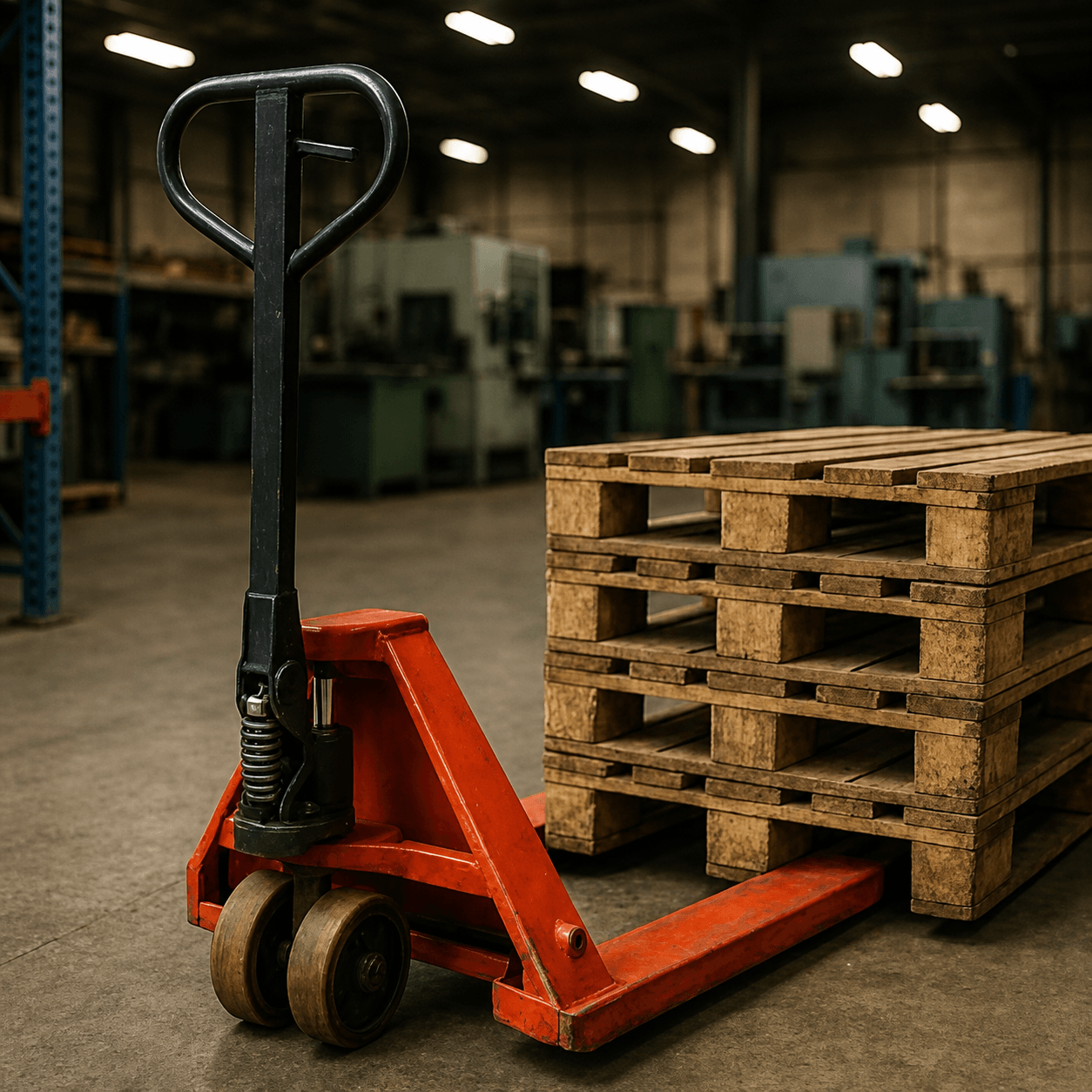
Materials wait between processes, work builds up in front of one operation while another is waiting. People are looking for parts, information, tools or a decision. Something as simple as a shared pallet truck, an unavailable tool or an unclear priority interrupts the flow.
On paper, these issues are small. Everyone works around them and production continues. Over time, waiting, adding extra stock to protect the activity, additional handling and repeated interruptions have become accepted as part of the normal working day.
The result is longer lead times, more work in progress and more disruptions. People remain active, but the operation produces less than the effort being put into it. Sometimes people are exhausted.
Improving flow starts by observing how work moves through the operation, where it stops, where it waits and where built ups are.
The objective is not to make people work faster, it is to remove what gets in their way, so less effort produces a more reliable output.

The same breakdowns keep returning
Machines never break down at convenient times.
It is usually the complete opposite. It is when the plan is tight, the specific competence is unavailable, or plan B is unactionable. Warning signs were there but not seen, escalated or acted on early enough.
Production delays increase, plans become disrupted, teams are pushed to their limits.
The common reaction is to restart production as quickly as possible. This is too often a temporary solution and rarely the end of the story.
Recurring breakdowns often continue because maintenance or asset management systems are weak or not respected, or when ownership is not clearly shared between production and maintenance teams.
Equipment-related disruption reduces when Equipment ownership is clear and basic equipment conditions are put under control. Operators are listened to because they know what early warning signs look like. Alerts are act on and small recurring issues are no longer accepted as normal.
If equipment reliability is affecting your production performance, Primus Passus Consulting can help you assess your reliability and asset management processes and support you build a practical action plan.
Actions are agreed, but progress stalls
Meetings produce actions. Owners and dates are agreed, but daily priorities soon pile-up. Deadlines move, follow-up is inconsistent and obstacles remains unresolved. Fustrations builds.
This is rarely a lack of commitment. Dome actions remain open too long, their impact unchecked. Immediate operational actions become mixed with longer-term improvement work, making priorities and progress difficult to manage.
Progress Management creates a clear rythm for reviewing what was agreed, what is moving or not and wether completed actions are producing the expected changes in performance.
Actions are adjusted when needed. Ownership is visible, the right stakeholders stay aligned and obsacles are addressed early.
The objective is not to maintain a longer action list. It is to remain agile and turn agreed action plans into sustained operational progress.
If lack of aligment is affecting your production performance, Primus Passus Consulting can help you assess your Daily Management and Progress Management and support you build a practical action plan.


Delivery depends on chasing
The operation keeps moving, but it takes constant effort to hold it together. Priorities change, problems return and people step in to prevent disruption from reaching the customer.
The pressure may appear in delivery, equipment reliability, quality, costs or the workload carried by a few key people.
These issues rarely exist in isolation. Unstable plans, interrupted flow, recurring breakdowns and unclear responsibilities can reinforce one another. Acting on the most visible symptom may leave the underlying causes untouched.
Before launching another action plan, you need to understand where control is being lost and which issues matter most.
An Operational Review looks at how the work moves through the business, where disruption occurs and what prevents more reliable performance. It helps establish a shared view of the situation and agree a practical starting point.